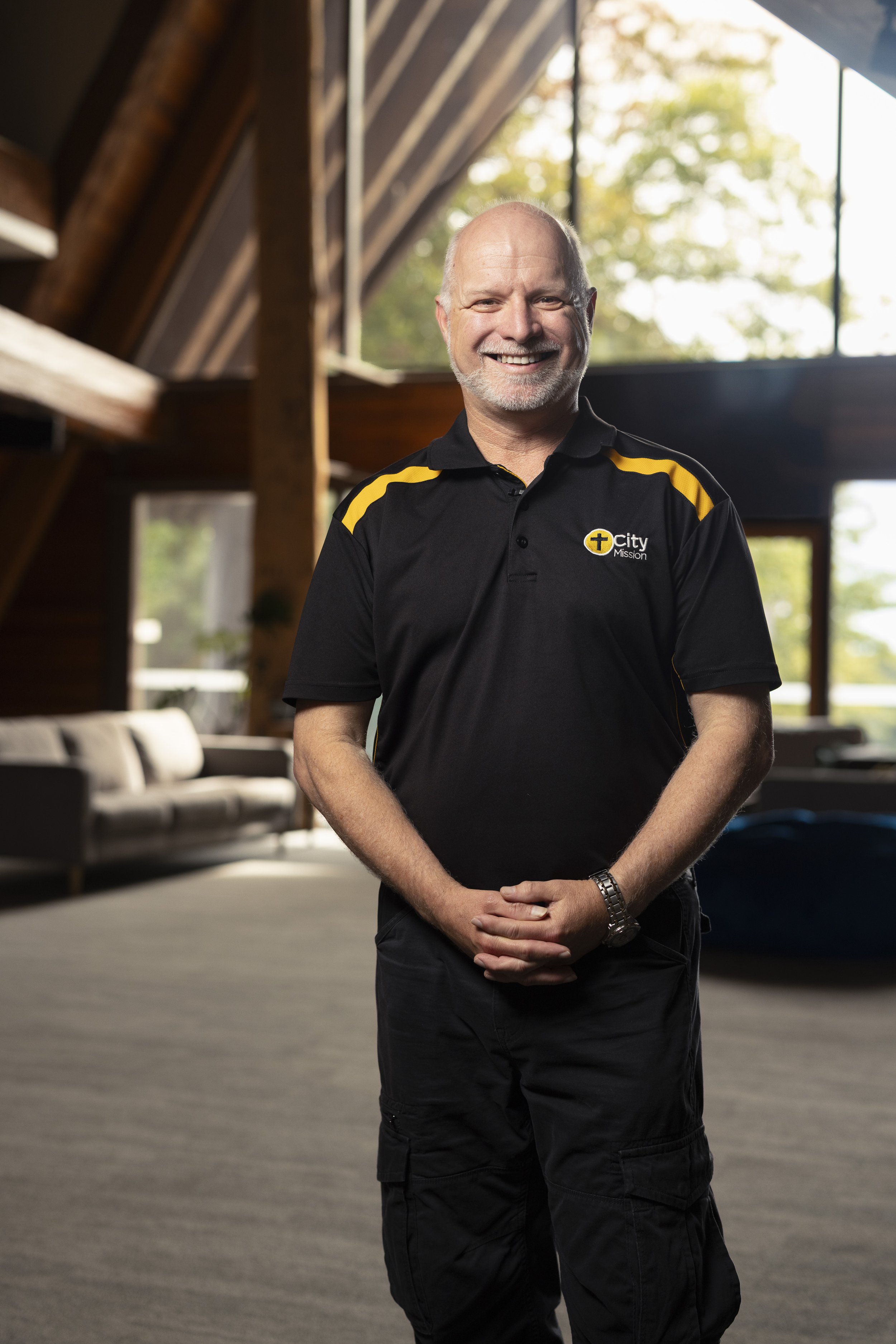
During National Homelessness Week, I attended a morning tea and panel discussion hosted by Launceston’s housing and homelessness services and the City of Launceston, focused on the challenges facing people in our community.
City Mission was also represented on the panel by Brad from our Safe Space team, who brought an important frontline perspective from working alongside people experiencing homelessness in Launceston.
The discussion brought together local services to share stories from people with lived experience, explore homelessness statistics and demographics in Tasmania, and explain the support available to people experiencing housing instability and hardship.
What stood out most was how much stronger our response can be when services work together.
No single organisation holds the entire answer to homelessness. Each service brings different experience, knowledge and support, but our greatest impact comes when we understand one another’s roles and work around the needs of the person seeking help.
National Homelessness Week gives us an important opportunity to talk about one of the most serious challenges facing our community. But it should also encourage us to look beyond the statistics, think about the people behind them and consider what we can do together to create change.
For those of us working alongside people experiencing homelessness and hardship, this is not an issue confined to one week of the year. At City Mission, we see its impact every day.
We meet people sleeping rough, living in vehicles, moving between temporary accommodation or staying with friends and family because they have nowhere else to go. We also meet people doing everything they can to hold their lives together while facing rising costs, poor health, family breakdown, trauma or a lack of secure housing.
There is no single face of homelessness and no single path into it.
The people who come through our doors are parents, workers, young people and older Tasmanians. They have skills, humour, hopes and plans for the future. Homelessness is not who they are. It is a difficult and often frightening situation they are experiencing.
That distinction matters. When we reduce people to a label, it becomes easier to judge them or assume their circumstances are simply the result of poor choices. The reality is usually far more complicated. One setback can quickly lead to another, particularly when someone has no savings, secure home or support network to fall back on.
Through City Mission’s Emergency Relief and Housing services, people often come to us looking for something immediate and practical. It might be food, assistance with an essential cost, information about another service or simply someone willing to listen.
Providing food may seem like a small response to a much bigger problem, but it can relieve enough pressure for someone to pay their rent, attend a medical appointment or care for their family. Just as importantly, it creates a point of connection. It gives us an opportunity to welcome someone without judgment and remind them that they have not been forgotten.
I am incredibly proud of the way our staff and volunteers do this every day. They respond to the person in front of them with warmth, patience and dignity, while helping them connect with further assistance wherever possible.
City Mission is also responding to needs that extend beyond emergency relief. Through Mission Health, people experiencing homelessness can access free, nurse-practitioner-led healthcare when they may otherwise go without treatment.
This work reminds us that homelessness is not only a housing issue. It is also closely connected to health, isolation and a person’s ability to access support. It is difficult to begin rebuilding your life while managing an untreated health condition or trying to navigate several different services simply to meet your basic needs.
This is why City Mission’s Launceston Community Precinct is so important. The Precinct will bring housing, healthcare and community support together in one place, making it easier for people to receive coordinated assistance and work towards greater stability.
It represents the kind of response our community needs: one that recognises that housing, health and connection cannot be treated as separate issues.
The panel discussion reinforced that homelessness is not something any one service, level of government or part of the community can solve alone. Lasting change will require housing and homelessness services, healthcare providers, governments, businesses, donors, volunteers and the broader community to remain strong and united.
We need more secure and affordable housing. We need accessible healthcare and practical assistance. We need services that work together, and we need a community willing to support those services and reject the stigma that still surrounds homelessness.
Judgment will not help someone find a safe home or rebuild their life. Practical support, healthcare, secure housing, human connection and hope can make an enormous difference.
City Mission has served North and North West Tasmania for more than 170 years, and that work has always been made possible by people who care about their neighbours. Our community has repeatedly shown that it is willing to step forward when people are doing it tough.
We should be proud of that, but we must also keep moving forward. Homelessness is complex, and there is no quick or simple answer. Progress will require courage, investment, cooperation and persistence.
No organisation can end homelessness by itself. But together, we can provide help today, build stronger pathways for tomorrow and create a community where fewer people are left to face hardship alone.
Stephen Hill
Operations Manager - Emergency Relief & Housing
City Mission