

Community Precinct
Transforming Community in the Heart of Launceston
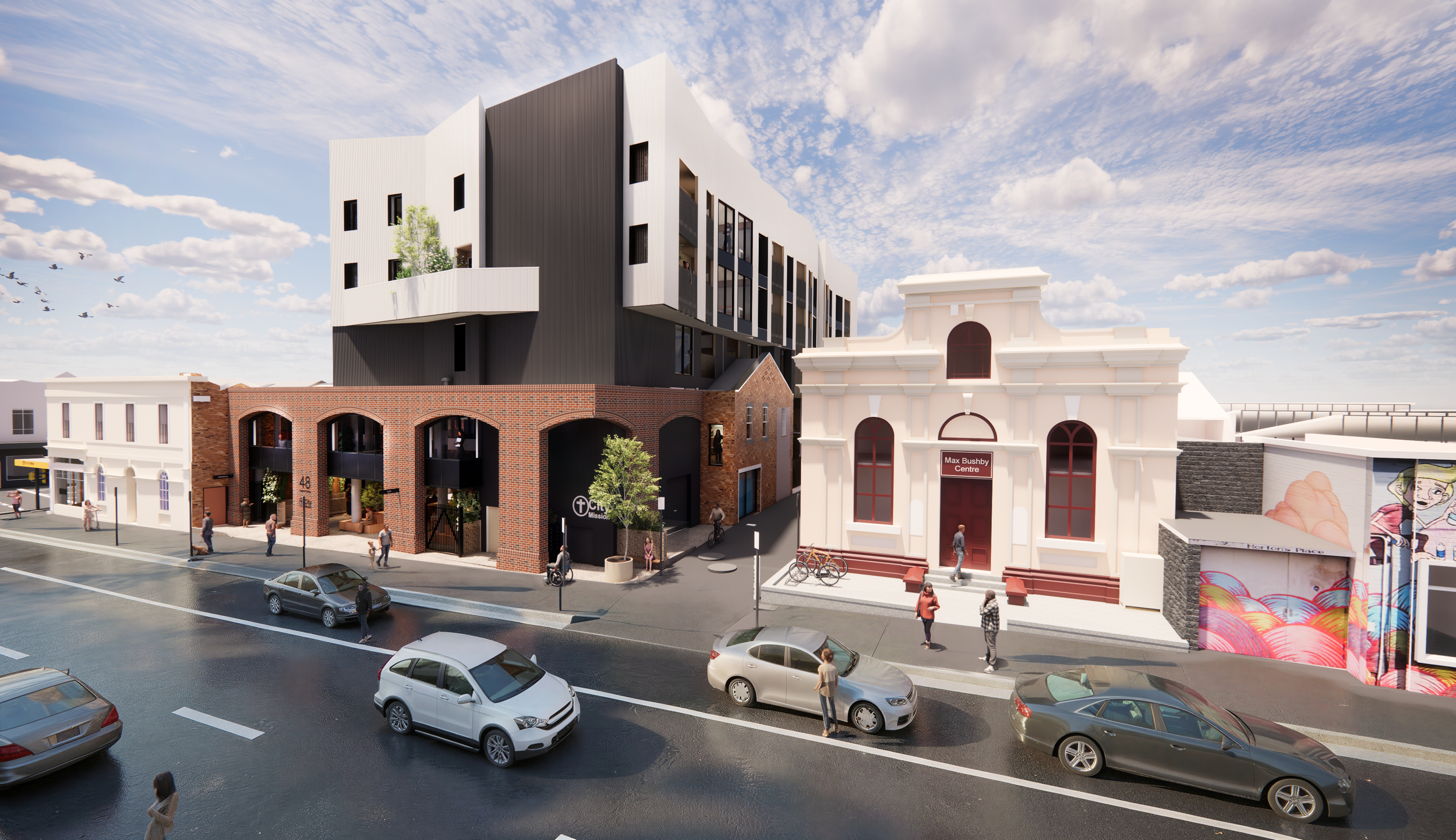
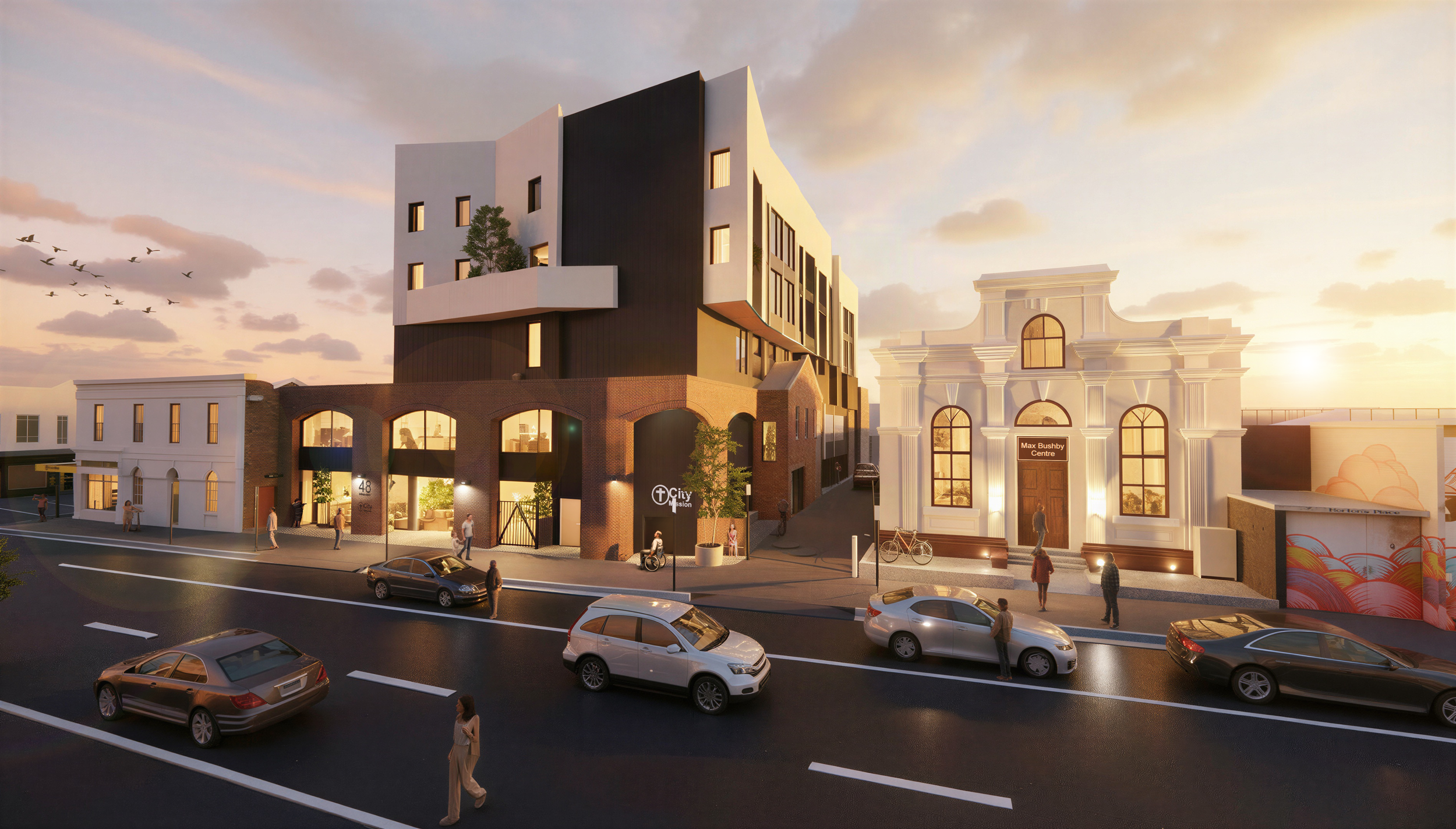
The proposed Launceston Community Precinct at 48 Frederick Street is a bold new initiative bringing together affordable housing, health services, and community support in one integrated, purpose-built hub - a place designed to strengthen connection, wellbeing, and opportunity for all.
About the Precinct
The Precinct will:
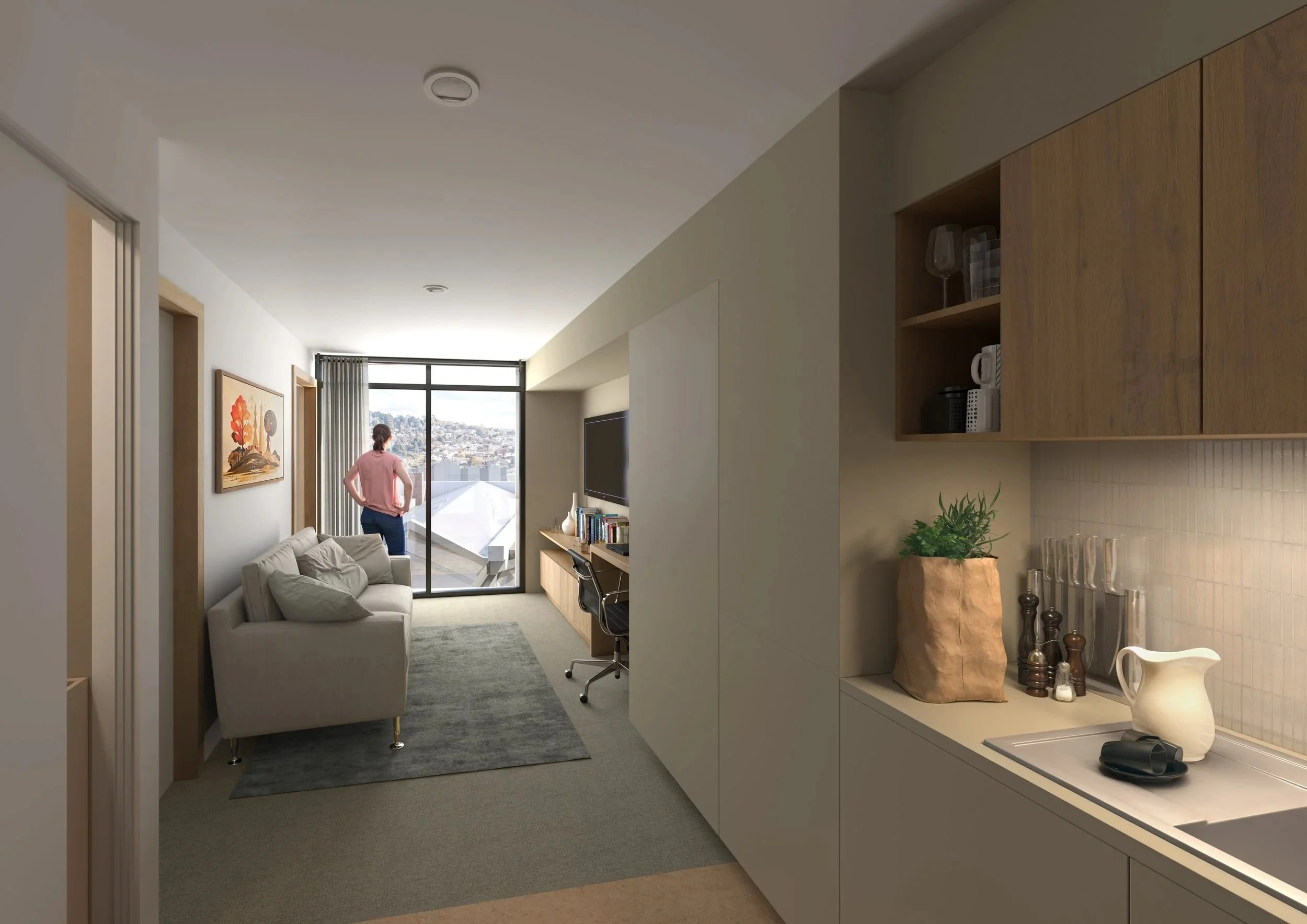
Provide 36 new units of affordable independent living accommodation.
Be home to a purpose-built, nurse-practitioner-led health clinic supported by volunteers and pro-bono clinicians, improving physical and mental health outcomes while reducing demand on emergency departments.
Create a hub of co-located services, making it easier for people to navigate support, receive warm referrals, and avoid falling through the cracks of the system.
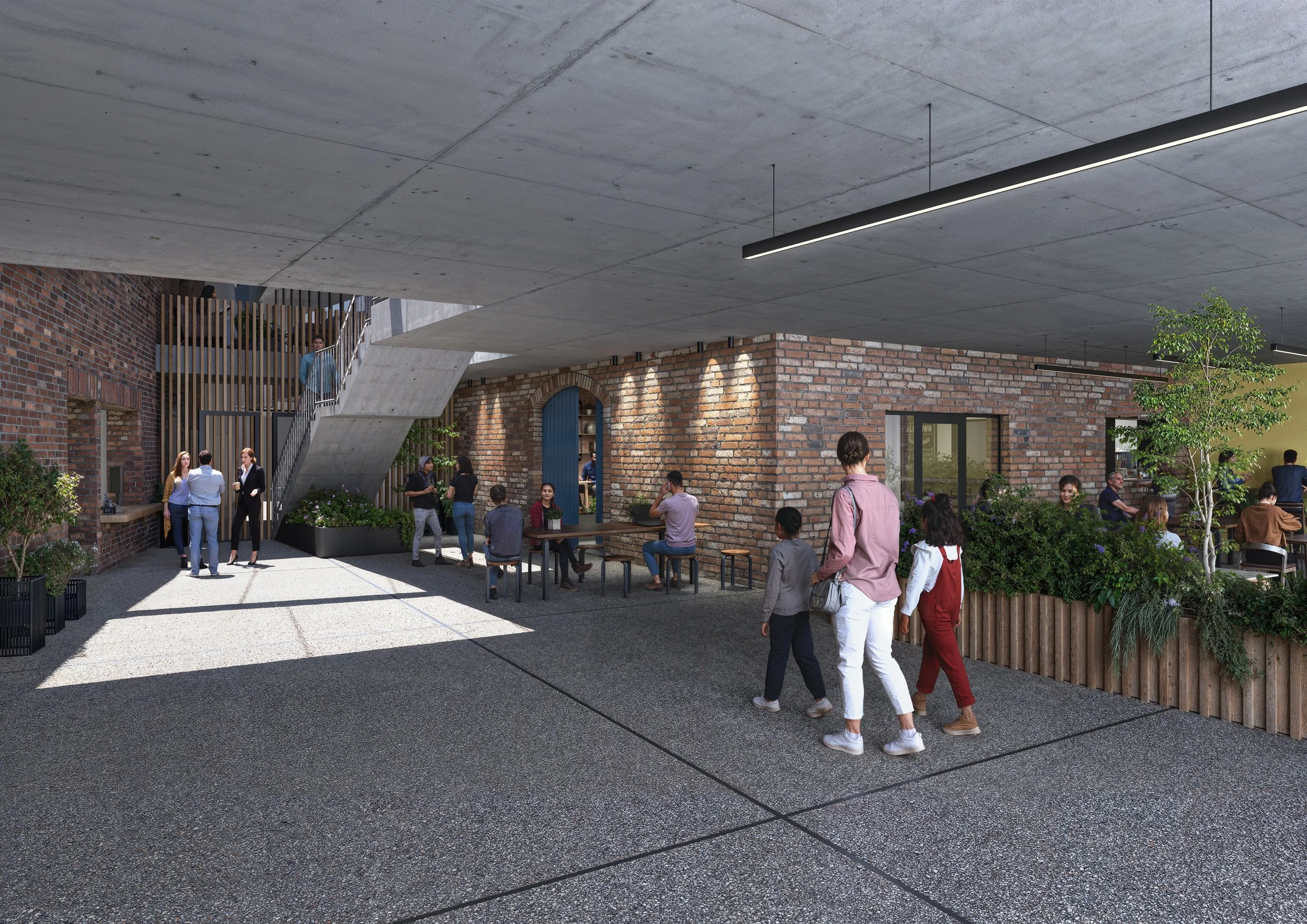
Feature welcoming public spaces, including retail and a café, where people of all walks of life can come together in dignity and community.
Increase City Mission’s capacity to serve more than the 500 people already supported weekly through its current facilities.
This integrated approach ensures that residents and visitors can access multiple supports in one location, improving outcomes and reducing the risk of people being lost in the system.
The Need for the Precinct
Tasmania is facing mounting community and housing pressures. Rising living costs have pushed thousands into financial stress, and food insecurity has escalated rapidly with more than one third of Tasmanians now affected.
At City Mission we have seen more than 2,500 people seeking food and financial relief locally - over 500 of whom are experiencing homelessness.
Housing pressures continue to deepen, with over 5,000 households on the social housing waitlist and vacancy rates in Launceston as low as 0.5 per cent. Affordable rentals remain out of reach for many, including pensioners, single parents and people on low incomes.
These factors are driving poorer health outcomes, increased hospital presentations and disengagement from preventative care, highlighting the urgent need for coordinated, community-based responses.
We are facing a crisis - housing, cost of living, health. Across our state, housing insecurity, food stress, and health disadvantage are no longer isolated issues. They are interconnected challenges affecting thousands of individuals and families - many of whom are struggling just to meet their basic needs.
Collaborative Model
The central location will allow people to connect more easily with integrated housing, health, and support. The model is based on simplicity: one welcoming place where people can access safe housing, healthcare, food, case management, and social connection - without being bounced between multiple agencies.
The Precinct also includes innovation and training spaces, enabling service providers, government and regional stakeholders to come together, share knowledge, and co-design new approaches to meeting community needs.
Regional Strategies
The project aligns with the Launceston Housing Plan (2025 - 2040), Launceston City Deal (2017 - 2027) and City Heart Project, all of which prioritise in-fill housing and adaptive reuse of heritage sites.
The Northern Tasmania Development Corporation (NTDC) lists the Launceston Community Precinct as a Regional Priority Project, recognising its importance for social outcomes and community resilience.
Sustainable and Inclusive Design
The Precinct has been designed to be sustainable, inclusive, and respectful of place. The project will be delivered with respect for Launceston’s heritage and cultural values, integrating sensitively with surrounding properties while being guided by trauma-informed and biophilic design principles. It will also ensure inclusion for groups most at risk of disadvantage.
The goal is to create a space that feels safe, welcoming, and connected to Launceston’s identity. Universal design ensures full accessibility, with step-free access, lifts, inclusive facilities, and community spaces that foster connection and belonging.


Economic Benefits
The Precinct will deliver significant economic benefits for Northern Tasmania, both during construction and on an ongoing basis.
The build is expected to provide 56 direct local jobs per year, generating $19.01 million in value added, and supporting 142 local jobs annually over the 18-month construction period.
Once operational, the Precinct will sustain around 118 direct local jobs per year, while also creating measurable social and economic value.
The housing component alone is estimated to save more than $675,000 annually - equivalent to $15,000 per person housed - by reducing pressure on crisis accommodation, health services, and the broader community.
Consultation
City Mission has been actively connecting with a wide range of stakeholders in the development of the Community Precinct proposal. Conversations have taken place with immediate neighbours, service partners, staff, the City of Launceston, State Government representatives, and other community organisations.
City Mission is also working with a team of highly regarded Tasmanian partners on the proposed Precinct, including Commercial Project Delivery, Philp Lighton Architects, Vos Constructions and Loreto Community Housing, ensuring the project design and delivery reflect the highest standards of quality, collaboration and community focus.
These discussions have provided valuable feedback on local needs, design considerations, and opportunities for collaboration. City Mission is committed to ensuring transparency and building trust throughout the process, and further engagement will continue as the project progresses.


“The proposed Community Precinct at 48 Frederick Street will transform the way people access support in Launceston. For those experiencing hardship and disadvantage, navigating services can be confusing and overwhelming. By bringing 36 new housing units, our purpose-built health clinic, and a hub of support services together under one roof, we can make sure people don’t fall through the cracks. This is about giving people a safe home, improving their health and wellbeing, and building a stronger, more connected community for us all.”
Dr Jo Fearman
CEO - City Mission
Frequently Asked Questions
These FAQs provide clear and factual information about key aspects of the Precinct.
They address general project details, housing and service arrangements, expected community benefits, the consultation and engagement process, our commitments to sustainability and inclusive design, and the project’s economic impact.
These FAQs are intended to give the Launceston community a transparent overview of how the project is being planned and delivered.
Download the FAQs via the link or view them directly below.
If you have any other questions or feedback, please contact us below.
General Project Questions
-
The Precinct is a landmark new development at 48 Frederick Street, right in the heart of Launceston’s CBD. It will bring together affordable housing, health services, and a range of community supports in one purpose-built hub. The goal is to provide stability, safety, and dignity for people experiencing disadvantage, while creating a welcoming environment for the broader community. By integrating services in a single location, the Precinct makes it easier for people to access the support they need without having to navigate multiple locations or systems.
-
The development will deliver 36 new housing units. These homes are designed to provide long-term stable housing for people experiencing disadvantage or housing stress. Residents will benefit from access to on-site services and support; purpose built inner-city apartments and a supportive community. This model will provide housing, stability and certainty for both social and affordable tenants.
-
The Precinct directly supports the Launceston City Deal (2017–2027), which prioritises in-fill housing in the CBD, particularly using heritage sites to revitalise the city heart. The project also features prominently in the Northern Tasmanian Regional Economic Development Strategy (2019–2026), which lists the Precinct as a priority initiative for its potential to deliver both social and economic benefits to Northern Tasmania. This alignment demonstrates that the Precinct is not just a social service project, but part of a broader vision for the city’s sustainable growth and vitality.
-
The project has received support from State and Federal Governments, including $11 million from the Australian Government’s Growing Regions Program and $8 million from Homes Tasmania.
Government investment lays the foundations - but our community will make it a home. Community support will help deliver the public spaces, specialist resources and wraparound supports that make this more than a building. It will be a place where people can rebuild their lives with safety, stability and hope.
-
The 36 self-contained apartments will provide safe, long-term housing for people in our community who are experiencing housing stress. Residents may include individuals or couples with income within the National Rental Affordability Scheme 2025-26 limits of $62,794 - $78,493 for one adult, or $86,818 - $108,523 for two adults. This could include young or old Tasmanians, local students or workers, or people who simply can’t find affordable accommodation in the current rental market. This is not crisis accommodation. The Precinct is designed to provide stable homes for people who are ready to live independently and contribute positively to the community, with wraparound support services available on-site.
-
City Mission remains fully committed to delivering the Launceston Community Precinct.
Following an appeal against the approved Development Application, City Mission participated in mediation in good faith. Although the matter was not resolved through mediation, City Mission has been advised that progressing amended plans through TASCAT provides the strongest pathway forward. This involves removing one floor of housing, reducing the number of social and affordable housing units from 48 to 36.
The original six-level proposal was developed and submitted based on advice available at the time, including advice from senior planners and advisers that the proposed scale was consistent with community need and sat within reasonable planning expectations.
The decision to reduce the building scope now is not a reflection that the original proposal was inappropriate. It is a response to legal advice received through the appeal process about the strongest pathway forward.
The project’s purpose remains unchanged: to deliver housing, health care, support and connection for people in Launceston. Even with 36 housing units, the Precinct remains a significant investment in housing, dignity and community wellbeing.
Housing and Services
-
In addition to housing, the Precinct will co-locate a nurse practitioner-led health clinic, social services, day centre supports, employment assistance, and caseworker support. There will also be a café and retail space, creating an inviting environment where people can connect socially and feel included in the wider community. By combining these services in one location, the Precinct ensures a seamless experience for people who would otherwise have to navigate multiple agencies, improving access and outcomes.
-
Currently, many people experiencing disadvantage face a fragmented service system, which can be confusing, overwhelming, and discouraging. The Precinct addresses this by providing “one-stop access”: clients can receive housing support, health care, case management, and referrals in a single, accessible location. This reduces the risk of people falling through the cracks, improves engagement with services, and helps individuals achieve better long-term outcomes.
-
The development includes welcoming spaces such as a café, retail area, landscaped gardens, and shared community rooms. These spaces are designed to feel safe, inclusive, and comfortable, so residents and visitors alike can interact with dignity, build relationships, and feel a sense of belonging.
Tenants
-
The 36 self-contained apartments will provide safe, long-term housing for people in our community who are experiencing housing stress. Residents may include individuals or couples with income within the National Rental Affordability Scheme 2025-26 limits of $62,794 - $78,493 for one adult, or $86,818 - $108,523 for two adults. This could include young or old Tasmanians, local students or workers, or people who simply can’t find affordable accommodation in the current rental market. This is not crisis accommodation. The Precinct is designed to provide stable homes for people who are ready to live independently and contribute positively to the community, with wraparound support services available on-site.
-
Most of the apartments are designed for single residents, however, there will also be three two-bedroom apartments to accommodate couples or small families. This ensures a healthy mix of residents and supports a balanced community within the Precinct. The overall design allows people to live independently and securely, while being part of a connected environment where everyone has access to on-site supports and shared community spaces.
Tenancy Management and Selection
-
Tenancies will be professionally managed by Loreto Community Housing, an experienced Tasmanian community housing provider. Loreto will handle all aspects of tenancy management, including:
• Application and eligibility assessment
• Tenant selection (based on clear, consistent criteria)
• Rent collection and maintenance
• Ongoing tenancy support and monitoring
Loreto has a strong track record in managing community housing across Tasmania and works closely with support partners to ensure residents are well-supported and maintain positive tenancies
-
Every tenant will undergo an assessment process to ensure they are a good fit for this model of supported independent living. This process prioritises people who are:
• In need of long-term, stable housing
• Seeking inner-city living and the benefits of easy access to public transport
• Likely to thrive in a mixed community environment
• Willing to engage positively with others and respect shared spaces
Tenants will either be allocated housing by Homes Tasmania from the social housing waitlist or selected by Loreto Community Housing from their established affordable housing application process.
Social and Affordable Housing
-
Social Housing
• Provides affordable, secure rental housing for Tasmanians on low incomes.
• Housing is allocated in accordance with the Residential Tenancy Act 1997.
• Rent is capped at 25% of gross family income.
• Can be provided by Homes Tasmania or community housing providers such as Loreto.
Affordable Housing
• Provides homes at affordable rents for households on low incomes who have no or low support needs.
• Rent is calculated at a maximum of 75% of market rent or 30% of gross family income, whichever is lower.
• Supports people who don’t qualify for social housing but need housing options below the private rental market.
• Applications for affordable housing at The Precinct will be managed by Loreto Community Housing. The Precinct will include a mix of both social and affordable housing, ensuring a diverse and balanced community.
Community Benefits
-
The Precinct is designed to serve not only residents but also the wider Launceston community. Public-facing areas, such as the café and retail spaces, encourage interaction between residents and other community members. Additionally, City Mission’s circular economy initiatives — including 11 op shops, 4 resale shops, and a transfer station — will be coordinated from the site, diverting over 1.4 million items from landfill each year. These initiatives contribute to environmental sustainability, create community engagement opportunities, and support local employment
-
Yes. By increasing housing supply and providing on-site integrated health and social services, the Precinct will reduce the demand on emergency shelters, hospitals, and crisis support services. Residents will have easier access to preventative care and ongoing support, which helps reduce reliance on emergency and short-term interventions.
-
The project incorporates gender equity considerations and trauma informed design principles, ensuring that those most at risk of disadvantage are supported in a safe and respectful environment. The design encourages social inclusion, reduces stigma, and ensures residents and community members feel valued and welcome.
Consultation and Engagement
-
Extensive engagement has been undertaken with a wide range of stakeholders, including:
• Neighbours and surrounding businesses
• Local service partners and providers
• The City of Launceston and Tasmanian Government representatives
• Community leaders and sector experts
• City Mission staff, volunteers, and clients
This early consultation has informed the design, service mix, and operational approach for the Precinct, helping ensure it meets both community and resident needs.
-
Consultation is ongoing. Community members will have opportunities to provide feedback throughout the Development Application process and as the project progresses. City Mission is committed to transparency and collaboration, sharing updates, hosting information sessions, and providing clear channels for questions and input.
Sustainability and Inclusive Design
-
The project retains and restores the heritage façade of 48 Frederick Street, integrating sensitively with surrounding buildings. The design is guided by trauma-informed and biophilic principles, creating spaces that are restorative, calming, and safe. Residents and visitors will experience a built environment that honours Launceston’s history while providing modern, functional, and welcoming facilities.
-
Yes. Universal design principles ensure full accessibility for people of all abilities. Stepfree access, lifts, wide doorways, and inclusive facilities mean that everyone can use the building safely and comfortably. Shared spaces and landscaped areas encourage social interaction, wellbeing, and a sense of belonging.
Economic Impact
-
The Precinct will generate substantial local economic benefits. During construction, it is expected to provide 56 direct jobs per year, support 142 local jobs annually, and contribute $55.45 million in output and $19.01 million in value added over 18 months. Once operational, it is projected to sustain 118 ongoing direct jobs each year, supporting local employment and skill development.
-
Providing stable housing has significant social and financial benefits. Each person housed in the Precinct is estimated to save the community $15,000 annually, through reduced reliance on crisis services, hospitals, and other supports. Across all residents, this equates to more than $675,000 in annual savings, creating measurable economic impact while improving people’s lives.
Contact Us
We welcome your questions, ideas and feedback about the Precinct.
Whether you’re a community member, local business, potential partner or simply curious to learn more, we’d love to hear from you.
Your insights and involvement will help ensure this project reflects the needs, values and aspirations of the Launceston community.
Please don’t hesitate to reach out — our team is here to listen, share information and support your connection to this exciting city-shaping initiative.